

Vorige week vertelde ik in een andere post al hoe ik kortgeleden door Screen Malta werd gevraagd om plaats te nemen in een panel over filmtoerisme. Het was de blog waarin ik beschreef hoe dat allemaal begon met één enkel mailtje aan de Malta Film Commission. Of ze mij konden helpen toegang te krijgen tot de filmstudio op Malta waar Gladiator eerder werd gefilmd. Allemaal voor een aflevering van mijn podcast aan het einde van het jaar, als het langverwachte vervolg op de film van Ridley Scott in de bioscoop uitkomt.
Toen zat ik 27 juni opeens in het Grand Master's Palace in Valletta op een podium met vakmensen uit de film- en toeristensector om in te gaan op de kansen van het combineren van die twee werelden.
Uit de presentaties van mijn panelgenoten, waaronder International Screen Tourism Expert Martin Cuff en Head of Experience & Industry Development van Tourism Northern Ireland, Eimaer Callaghan, werd mij opnieuw duidelijk hoe overtuigend het bewijs is dat Screen Tourism niet onderschat moet worden.
Dat werd nog eens extra onderstreept door de aanwezigheid en toespraak van de minister van toerisme van Malta, Clayton Bartolo. En door het vlammende betoog van de Film Commissioner van Malta, Johann Grech die ook met een stappenplan kwam om film op Malta een nog veel grotere rol te geven.
 Screen Tourism Conference - international panel / foto Screen Malta & Mediterrane film Festival
Natuurlijk kwam ook de keerzijde van massatoerisme aan bod. Net zoals ook het gebruik van auteursrechtelijk beschermde filmmaterialen werd benoemd als een serieus punt van aandacht (want je wilt toeristen tenslotte wel kunnen laten zien hoe de locaties werden gebruikt). Maar de algemene toon leek er toch vooral een te zijn van optimisme en mogelijkheden. En dat het erop aankomt om de wereld van toerisme en films en series op een goede manier samen te brengen, zodat het beiden versterkt.
Terwijl ik het allemaal aanhoorde werd mij steeds meer duidelijk dat al deze professionals - of ze nu afkomstig waren uit de toeristensector of de filmwereld - het in wezen hadden over ... mij.
Niet over mij persoonlijk natuurlijk, maar over mij als reiziger, over mij als filmliefhebber, over de persoon die het zo ontzettend leuk vindt om de plekken te bezoeken waar films en series zijn opgenomen. En die er geld voor over heeft om in de voetsporen van de filmmakers te treden. En die films en series wil kunnen herbeleven op de locaties waar ze werden opgenomen.
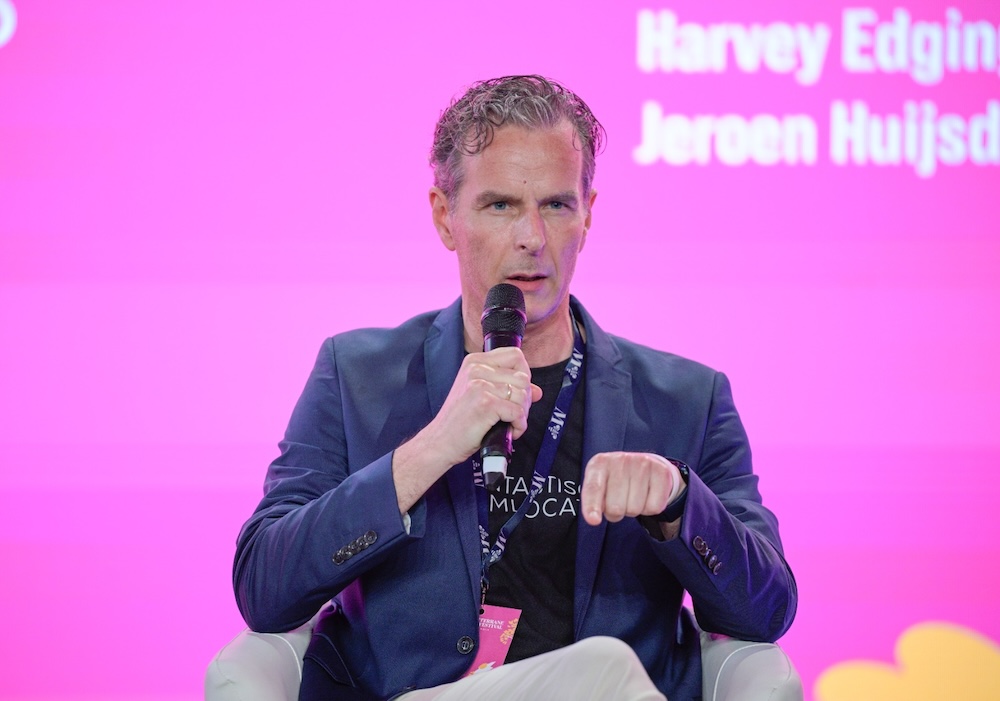 Screen Tourism Conference - international panel / foto Screen Malta & Mediterrane film Festival
Screen Tourism Expert Martin Cuff plaatste Screen Tourism wat dat betreft echt bij Experience Tourism. Dat is een vorm van reizen waarbij mensen dingen willen doen waar ze zelf echt onderdeel van de beleving zijn. En waar ze waardevolle herinneringen aan over houden. Het is een vorm van toerisme die jaarlijks met 12% groeit, aldus Cuff en in 2020 al werd geschat op een wereldwijde omvang van 1,02 triljoen dollar.
Uit onderzoek over Screen Tourism komt ook naar voren dat de groep mensen die zich bij hun keuze van vakantiebestemming laat beïnvloeden door de films en series nog steeds groeiende is (ik meen een tijdje terug al gehoord te hebben dat 1 op de 5 reizigers dat nu al doet). En nog interessanter: mensen in deze groep verblijven doorgaans langer op een locatie én geven meer geld uit dan andere toeristen. Ja, dat horen ze natuurlijk graag in de toeristensector...
Toch denk ik dat Screen Tourism ook de filmwereld ten goede kan komen. Niet alleen omdat het een deur opent naar het publiek en het films en series 'levend' houdt. Maar ook omdat het filmprofessionals op ideeën kan brengen, om de films en series van de toekomst te maken. Dat bleek wel toen het direct na de conferentie in de wandelgangen ging over de filmverhalen die te vertellen zijn over de Ridders van Malta.
Ik voorspel dan ook dat we tussen nu en pakweg vijf jaar een film gaan zien over die ridders, gedraaid op de fantastische filmlocaties die Malta te bieden heeft. En dat ik er tegen die tijd ook weer rondloop om mensen er over te kunnen vertellen in mijn podcast.
 Op de foto van links naar rechts: Harvey Edgington (Senior Filming and Locations Manager, National Trust, UK), Martin Cuff (International Screen Tourism Expert) moderator, Eimear Callaghan (Head of Experience & Industry Development, Tourism Northern Ireland), Jeroen Huijsdens (Film Locations Podcaster), Meghan Beaton (Chief Executive, Norwegian Film Commission) en Adrian Wootton (Chief Executive - British Film Commission)
Meer weten over de fantastische filmlocaties op Malta? Abonneer je op de podcast Fantastische Filmlocaties. En meld je aan voor de tweewekelijkse nieuwsbrief.
Speciale dank aan Screen Malta en Visit Malta voor het mogelijk maken van de reis.
======================================================
For the international readers: I translated this blog for you in English.
Screen Tourism: 'you ain't seen nothing yet!'
I've had to pinch myself a few times in the past few days. Whether what I experienced was really real. That I didn't dream it. Well, I can truly assure you: it was all real.
Last week in another post I mentioned how I was recently asked by Screen Malta to take part in a panel on film tourism. It was the blog where I described how it all started with a single email to the Malta Film Commission. If they could help me gain access to the film studio in Malta where Gladiator was previously filmed. All for an episode of my podcast at the end of the year, when the long-awaited sequel to Ridley Scott's film hits theaters.
Then, on June 27, I suddenly found myself on a stage at the Grand Master's Palace in Valletta with professionals from the film and tourism sectors to discuss the opportunities of combining those two worlds.
The presentations from my panel mates, including International Screen Tourism Expert Martin Cuff and Tourism Northern Ireland's Head of Experience & Industry Development, Eimaer Callaghan, once again made it clear to me how compelling the evidence is that Screen Tourism should not be underestimated.
This was further underlined by the presence and speech of Malta's Minister of Tourism, Clayton Bartolo. And by the passionate argument of the Film Commissioner of Malta, Johann Grech, who also came up with a step-by-step plan to give film an even greater role in Malta.
Of course, the downside of mass tourism was also discussed. Just as the use of copyrighted film materials was also mentioned as a serious point of attention (after all, you want to be able to show tourists how the locations were used). But the general tone seemed to be one of optimism and possibility. And that it is important to bring the world of tourism and films and series together in a good way, so that it strengthens both.
As I listened to it all, it became increasingly clear to me that all these professionals - whether from the tourism sector or the film industry - were essentially talking about... me.
Not about me personally of course, but about me as a traveler, about me as a film lover, about the person who really enjoys visiting the places where films and series were filmed. And who is willing to pay to follow in the footsteps of the filmmakers. And those who want to be able to relive films and series in the locations where they were filmed.
Screen Tourism Expert Martin Cuff really placed Screen Tourism with Experience Tourism in that respect. That is a form of travel where people want to do things where they are really part of the experience. And of which they have valuable memories. It is a form of tourism that is growing at an annual rate of 12%, according to Cuff, and was already estimated to be worth .02 trillion worldwide in 2020.
Research into Screen Tourism also shows that the group of people who are influenced by films and series in their choice of holiday destination is still growing (I think I heard a while ago that 1 in 5 travelers already do so). And even more interesting: people in this group usually stay longer at a location and spend more money than other tourists. Yes, of course they like to hear that in the tourist sector...
Yet I think that Screen Tourism can also benefit the film world. Not only because it opens a door to the audience and keeps films and series 'alive'. But also because it can give film professionals ideas to make the films and series of the future. This became apparent when, immediately after the conference, the discussion in the corridors was about the film stories that can be told about the Knights of Malta.
I therefore predict that between now and about five years we will see a film about those knights, shot at the fantastic film locations that Malta has to offer. And that by then I will be walking around again so I can tell people about it in my podcast.
Want to know more about the fantastic film locations in Malta? Subscribe to the Fantastic Film Locations podcast. And sign up for the biweekly newsletter.
Special thanks to Screen Malta and Visit Malta for making the trip possible.